

What to Wear Packrafting: Layering, PFDs, and Cold-Water Safety
This is the question new packrafters ask most, and it is the one where a wrong answer carries real consequence. The rule underneath every recommendation below is simple: dress for the water, not the weather. A seventy-degree afternoon over fifty-degree water is a cold-water day.
Why water temperature governs
Cold water pulls heat from the body far faster than cold air. Sudden immersion also triggers an involuntary gasp reflex and rapid loss of manual dexterity, both of which arrive well before hypothermia does. The clothing decision is about surviving the first few minutes in the water, not about staying comfortable in the boat.
Warm water, low swim risk
Flatwater in high summer, water comfortably above roughly seventy degrees. Dress as you would for hiking. Quick-drying synthetic layers, sun protection, and a rain shell if you want splash protection. Cotton is still a poor choice, but the stakes are lower.
Cool water or moving water
This is most of the season in the Pacific Northwest. A wetsuit or a splash top with insulating layers underneath. Neoprene socks or booties make a bigger difference to comfort than most people expect, because your feet sit in the coldest part of the boat.
Cold water
Below roughly sixty degrees, or any time a swim would be serious, a drysuit is the correct answer. It is expensive, and it is the single piece of gear most likely to matter. Under it, wear synthetic or wool base layers sized so they do not compress.
The PFD is not optional
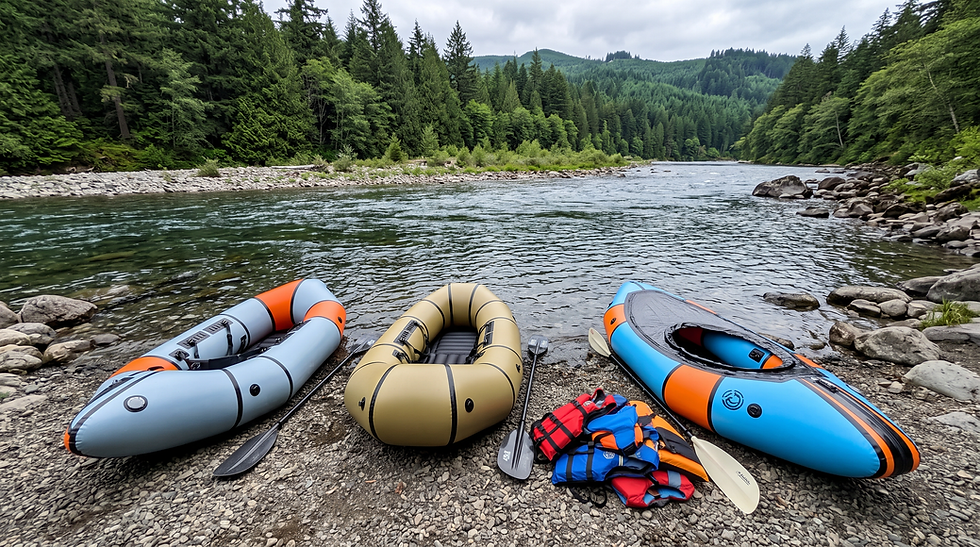
Wear it, fitted and buckled, every time. A PFD you are sitting on is a cushion, not a safety device. Look for one cut for paddling so it does not ride up when you are seated, and make sure it does not interfere with a spray skirt if you use one.
The rest of the kit
Helmet: required for any moving water with rocks. Class II and above, no exceptions.
Footwear: closed-toe shoes that stay on your feet in current. Sandals with heel straps at minimum.
Gloves or pogies: cold hands lose grip before you notice.
Dry layer in a dry bag: a complete change of insulating clothing, stored where you can reach it after a swim.
Sun protection: reflection off water roughly doubles exposure.
A note on staying warm in the boat
Configuration matters here too. A self-bailing boat means sitting in water most of the day, which is welcome in August and punishing in April. A removable spray skirt is genuinely a warmth feature, and it is why many paddlers who own one boat choose a skirted model.


Comments