


Packraft vs Inflatable Kayak: Which One Should You Buy?
Packraft vs inflatable kayak is one of the most common questions new paddlers ask. Both boats inflate, both roll up for storage, and both are paddled with a double-bladed paddle. But they're designed for very different trips. Here's how they compare, and how to decide which one belongs in your gear closet.
The Quick Answer
Choose a packraft if you want to carry your boat on your back, combine paddling with hiking or biking, or run rivers far from the road. Choose an inflatable kayak if you mostly launch next to your car, paddle longer distances on flat water, and want a bit more speed.
What Is a Packraft?
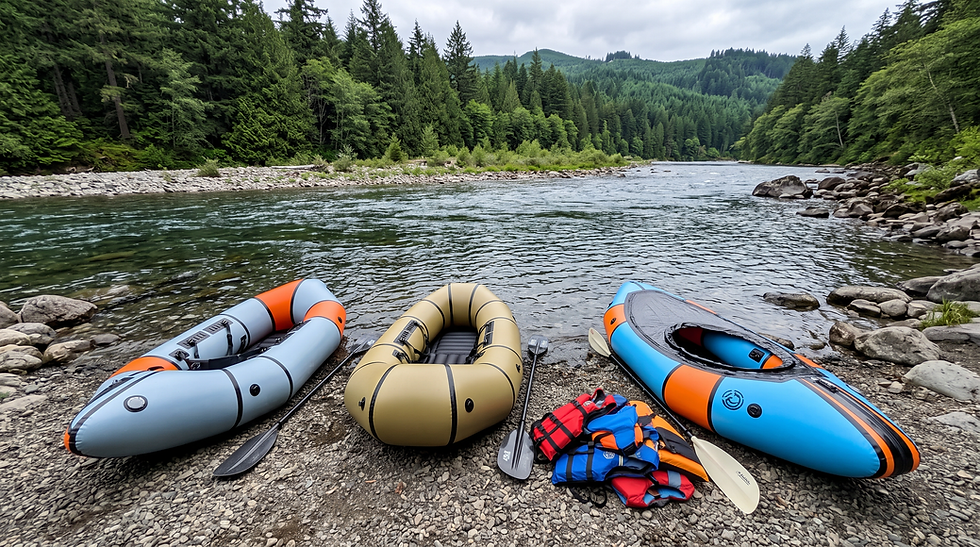
A packraft is a lightweight, single-person inflatable boat designed to be carried. Most weigh 5–9 pounds and pack down to the size of a sleeping bag, so they fit inside or on a backpack. Packrafts are short and wide, with large tubes that make them very stable and capable in whitewater when properly outfitted.
What Is an Inflatable Kayak?
An inflatable kayak (often called an IK) is longer and narrower than a packraft, built to paddle efficiently from a car-accessible launch. Many use multiple air chambers, drop-stitch floors or high-pressure construction. They typically weigh considerably more than a packraft and usually need a full-size pump.
Key Differences at a Glance
Weight and packed size
Packrafts win easily. A packraft and its paddle can ride in a daypack; most inflatable kayaks need a car trunk.
Speed and tracking
Inflatable kayaks are longer, so they track straighter and glide faster on open water. Packrafts are shorter and can feel slower on big lakes, especially into the wind.
Stability
Both are stable. A packraft's wide, round tubes give it excellent primary stability, which is why beginners feel at home quickly.
Whitewater
A well-outfitted packraft with thigh straps and a spray skirt or self-bailing floor can handle serious rapids. Many inflatable kayaks are designed for flat water, though dedicated whitewater IKs exist.
Setup time
Packrafts inflate in a few minutes with a lightweight inflation bag. Inflatable kayaks often take longer and require a bulkier pump.
Price
Budget inflatable kayaks can be inexpensive, while quality packrafts typically cost $1,000 or more. You're paying for lighter, tougher fabrics and backcountry-ready construction.
Choose a Packraft If You Want To…
Hike or bike to remote lakes and rivers
Cross rivers or link trails on backpacking trips
Run Class I–III whitewater in a boat you can carry out
Travel by plane, bus or train with your boat
Store your boat in an apartment closet
Choose an Inflatable Kayak If You Want To…
Paddle mostly from roadside launches
Cover longer flatwater distances efficiently
Paddle tandem with lots of room
Spend as little as possible for casual lake days
Can a Packraft Replace a Kayak?
For many paddlers, yes. A packraft won't match a sea kayak on a long open-water crossing, but it opens up places no kayak can reach. If your favorite trips start at a trailhead rather than a boat ramp, a packraft is the more versatile tool.
The Bottom Line
If portability and adventure matter more than top speed, go with a packraft. Our boats are handcrafted in Portland, Oregon and range from the 5–6 lb Carver to the whitewater-ready Stance. Not sure which fits? Read How to Choose a Packraft or browse all packrafts.
Frequently Asked Questions
Is a packraft faster than an inflatable kayak?
Usually not. Inflatable kayaks are longer and track better, so they're faster on flat water. Packrafts trade some speed for portability and whitewater ability.
Are packrafts more stable than kayaks?
Packrafts are very stable thanks to their wide, round tubes, which is one reason beginners find them easy to paddle.
Can you take a packraft on whitewater?
Yes. Packrafts with thigh straps and a self-bailing floor or spray skirt are designed for rapids. Go North packrafts are rated for Class I–III water.
Which is better for backpacking?
A packraft. At 5–9 pounds and sleeping-bag size, it's built to be carried; most inflatable kayaks are too heavy and bulky for long approaches.


Comments