

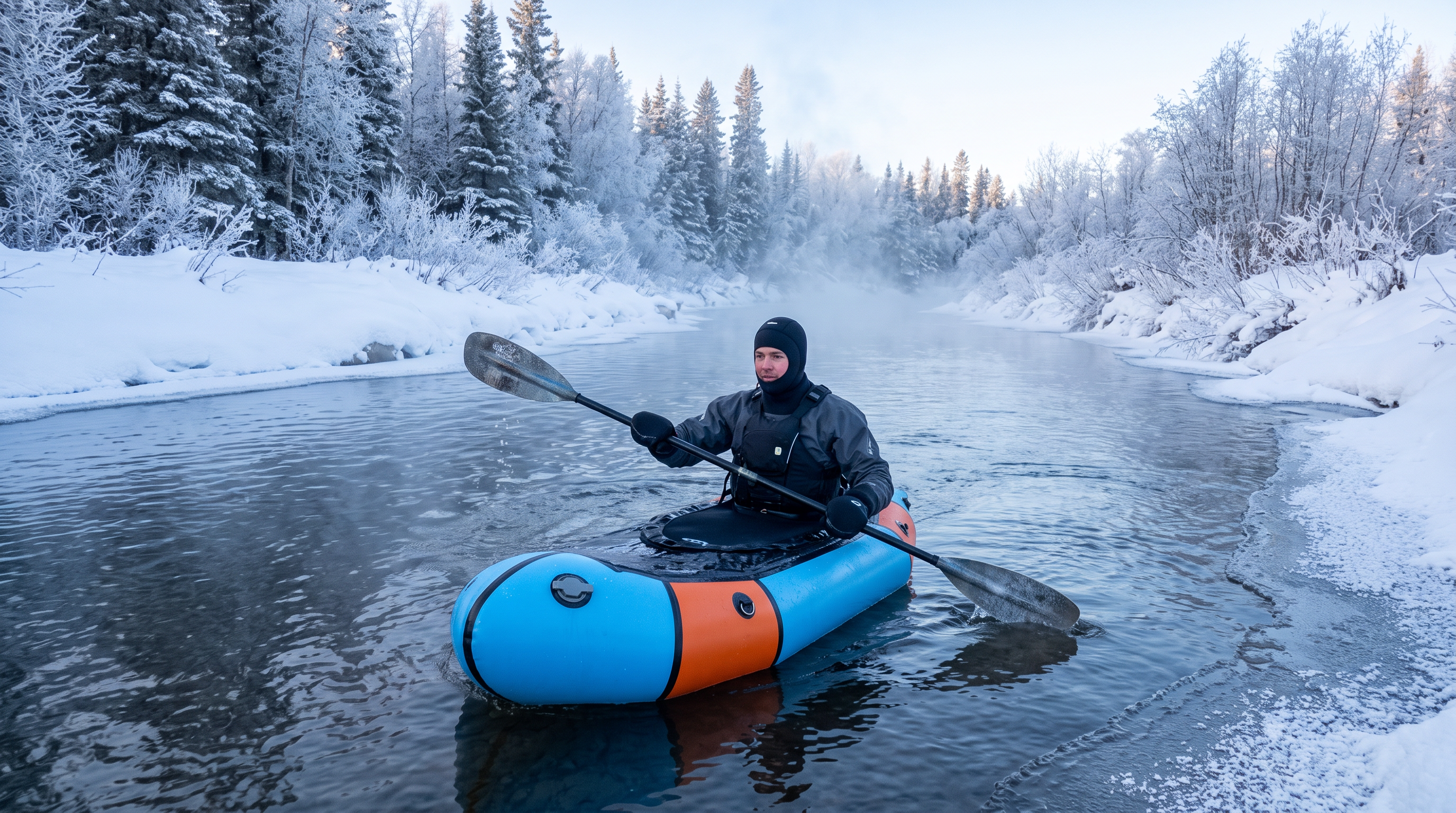
Winter Packrafting: 11 Tips for Paddling Safely Through the Cold Season
Picture a river with nobody on it. Frost on the canyon walls, steam curling off the water, and the only sound is your paddle. That's winter packrafting, and once you've tried it, summer crowds start to feel a little loud. But winter packrafting changes the rules. The water that felt refreshing in July can incapacitate you in minutes in January. The good news: with the right gear and a few habits, cold-season paddling is safe, rewarding and surprisingly comfortable.
Why Paddle in Winter at All?
Winter rain often brings rivers back to life when summer flows dry up, especially across the Pacific Northwest and coastal ranges. You'll have put-ins to yourself, wildlife is easier to spot, and the light is incredible. A packraft makes winter trips even easier: it rolls up small, fits in a car or backpack, and inflates in minutes at the water's edge.
The Golden Rule: Dress for the Swim, Not the Weather
Every winter paddler should know the 1-10-1 rule. If you fall into cold water, you have about 1 minute to control your breathing through cold shock, roughly 10 minutes of meaningful movement before your muscles stop cooperating, and about 1 hour before hypothermia can make you lose consciousness. Your clothing has to buy you that time. For a deeper look at the risk, read our Be WaterWise guide to cold water.
11 Winter Packrafting Tips
1. Wear a Dry Suit (or at Least a Wetsuit)
A dry suit with warm fleece underneath is the gold standard for winter packrafting. A thick wetsuit works for shorter, calmer runs. Cotton has no place on a winter river. Our guide to what to wear packrafting breaks down the layering system.
2. Keep Your Hands Working
Cold hands can't grip a paddle, open a valve or clip a buckle. Pogies keep your bare hands on the shaft while blocking wind and spray. Here's how they compare in our pogies vs. gloves breakdown.
3. Never Paddle Alone
In winter, a partner isn't a nice-to-have. If someone swims, a second boat and a second set of hands can turn a dangerous situation into a story.
4. Choose Shorter, Familiar Runs
Daylight is limited and every mistake costs more. Winter is the time for routes you know well, with easy access and quick take-outs.
5. Watch for Ice Shelves and New Strainers
Shelf ice along banks can collapse, and winter storms knock fresh trees into rivers. Scout anything you can't see around, and portage when in doubt.
6. Top Off Your Raft After It Hits the Water
Cold water shrinks the air inside your tubes, so a raft that felt firm on shore can go soft once it's floating. Let it sit in the water for a minute, then top it off. We explain why in our guide to inflating a packraft properly.
7. Pack a Full Change of Clothes
Keep a warm, dry layer set, a hat and spare socks in a dry bag you can reach quickly. If anyone gets wet, you change immediately.
8. Bring Hot Drinks and Easy Calories
Your body burns more fuel staying warm. A thermos of something hot and snacks you can eat with gloves on make a huge difference to morale and safety.
9. Respect the Daylight
Plan to be off the water well before dark. Starting late in winter is how easy trips turn into headlamp epics.
10. Leave a Trip Plan
Tell someone your put-in, take-out and expected return time. Phone signal disappears fast in canyons, and cold makes batteries die faster too.
11. Know the Signs of Hypothermia
Watch your group for the "umbles": stumbles, mumbles, fumbles and grumbles. Shivering, clumsy hands and confusion mean it's time to get off the water and warm up.
What Kind of Packraft Works Best in Winter?
A non-self-bailing raft with a spray skirt keeps water out of the boat and your lower body much warmer. The Stance Packraft and Achelous Packraft both feature removable spray skirts secured with a heavy-duty zipper and Velcro system. The Element, Badger and Carver are also available in non-self-bailing configurations, which are ideal for colder conditions.
Winter Packrafting Checklist
Dry suit or thick wetsuit with synthetic or wool layers underneath
PFD sized to fit over your winter layers
Pogies or neoprene gloves, plus a warm hat or neoprene hood
Insulated, waterproof footwear
Dry bag with a full change of clothes
Thermos, snacks and a lighter or fire starter
Headlamp, whistle, throw bag and repair kit
Charged phone in a waterproof case, plus a satellite communicator for remote runs
Winter rewards prepared paddlers with some of the most peaceful days on the water you'll ever have. Gear up, pick your run carefully and enjoy having the river to yourself.
Frequently Asked Questions
Is winter packrafting safe?
Winter packrafting can be safe when you dress for immersion, paddle with a partner, choose familiar runs and stay off the water in high or icy conditions. Cold water is the biggest hazard, so a dry suit and a solid plan are essential.
What should I wear for winter packrafting?
Wear a dry suit or thick wetsuit over synthetic or wool insulation, a properly fitted PFD, pogies or neoprene gloves, a warm hat and insulated waterproof footwear. Avoid cotton completely.
Why does my packraft get soft in cold water?
Cold water cools and contracts the air inside the tubes, which lowers the pressure. Let your raft sit in the water for a minute after inflating, then top it off.
Is a self-bailing or spray deck packraft better in winter?
A non-self-bailing packraft with a spray skirt keeps water out of the boat and keeps you warmer, which makes it the better choice for most cold-weather paddling.


Comments