

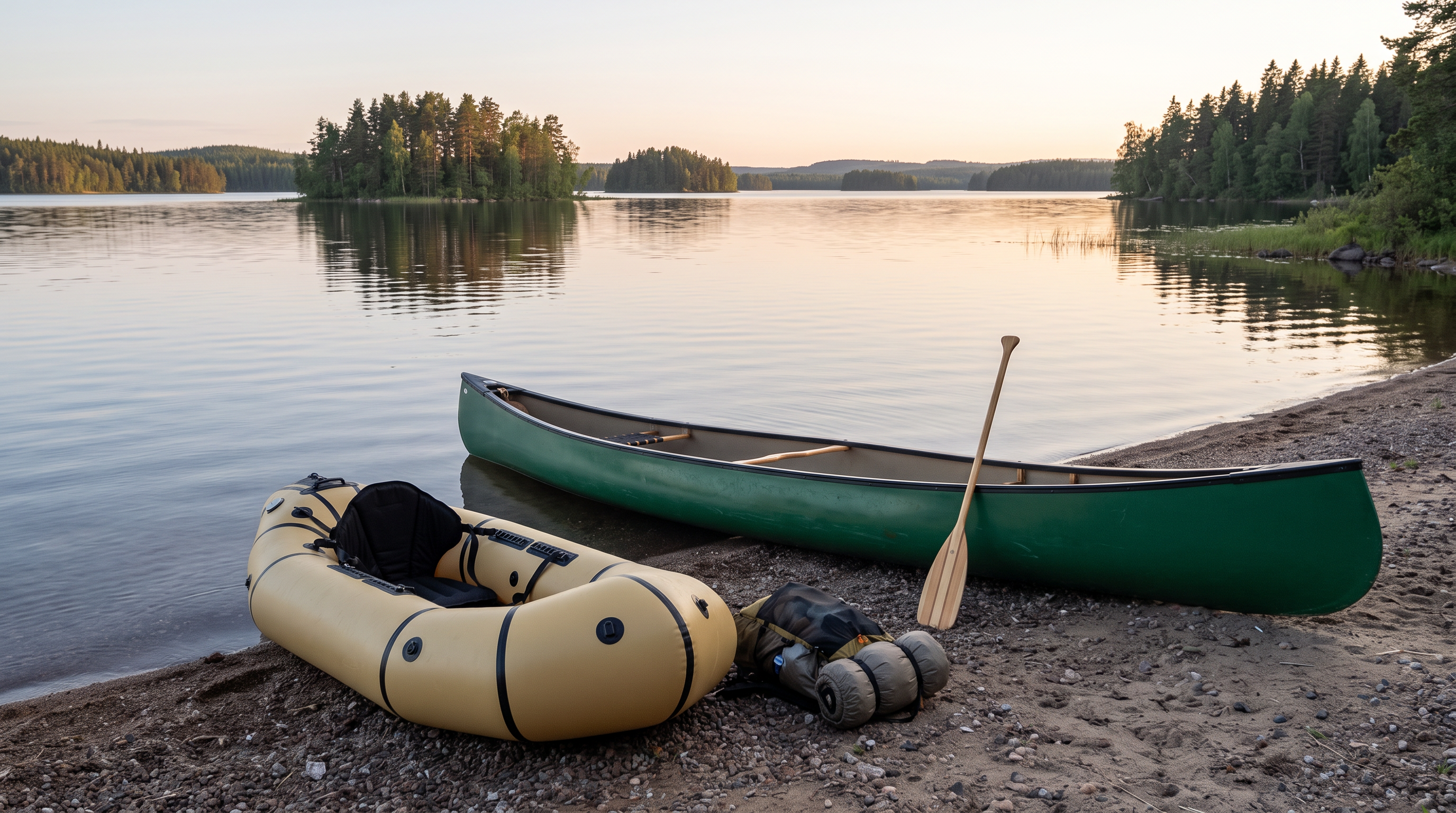
Packraft vs Canoe: Which Boat Wins for Backcountry Adventures?
The canoe is a classic. It's been the boat of choice for wilderness travel for generations, and for good reason. But if you've ever carried one over a two-mile portage, you've probably dreamed of something lighter. That's where packrafts come in. So which one should you choose? It depends on where you paddle and how you get there.
The Quick Answer
Choose a canoe if you mostly paddle flatwater lakes, you launch from the car or short portages, and you want to cover long distances efficiently with lots of gear. Choose a packraft if you want to hike, bike or fly to remote water, run moving water and rapids, travel light, or store your boat in a closet.
Packraft vs Canoe: Side-by-Side
Factor | Packraft | Canoe |
Typical weight | About 5 to 14 lbs | Often 40 to 80 lbs |
Packed size | Rolls up to backpack size | Full length, roof rack required |
Portaging | Carry it in your pack | Shoulder carry or multiple trips |
Flatwater speed | Slower | Faster and more efficient |
Wind | More affected | Less affected when loaded |
Whitewater | Excellent in Class I to III | Specialized skills and boats needed |
Storage | A closet or car trunk | Garage, rack or yard |
Travel | Checks in luggage | Hard to transport long distances |
Weight and Portability
Go North packrafts range from the 5 to 6 lb Carver to the 13 to 14 lb Glacier tandem. That means you can hike into an alpine lake, carry around a waterfall or paddle one river and hike to the next. Learn more in how much a packraft weighs.
Whitewater and Moving Water
Packrafts are stable, forgiving and buoyant in rapids. With thigh straps and a spray skirt, they handle technical water that would swamp most canoes.
Access and Freedom
No roof rack, no trailer and no shuttle drama. Pack it in a duffle, throw it in the trunk or strap it to a bike for bikerafting.
Where Canoes Win
Speed on Flatwater
A long canoe hull glides with each stroke. On big lakes, a canoe will cover distance faster and with less effort.
Wind
Packrafts are light and sit high, so headwinds can slow them down. Loaded canoes handle open water and wind better.
Simplicity With Big Loads
Canoes swallow barrels, coolers and dogs with ease. That said, a high-capacity packraft like the Element or the Glacier tandem carries a lot more than most people expect.
Which Is Right for You?
Boundary Waters-style lake travel with short portages: a canoe is hard to beat.
Hike-in lakes, river traverses and remote trips: a packraft is the clear winner.
Hunting and fishing in hard-to-reach water: packraft, especially a stable or tandem model.
Mixed whitewater and flatwater: packraft.
Limited storage or no roof rack: packraft.
Many paddlers end up with both. But if you want one boat that can go almost anywhere, a packraft opens up a whole new map. Comparing more boats? See our posts on packraft vs inflatable kayak and packrafts vs hard-bottom rafts.
Frequently Asked Questions
Is a packraft better than a canoe?
A packraft is better for portability, whitewater, hike-in access and storage. A canoe is better for speed on flatwater, wind and simple long-distance lake travel with heavy loads.
How much lighter is a packraft than a canoe?
Packrafts usually weigh about 5 to 14 lbs, while many canoes weigh 40 to 80 lbs. That difference makes long portages and hike-in trips far easier.
Can a packraft carry as much gear as a canoe?
A standard single packraft carries less, but high-capacity models like the Element and tandem packrafts like the Glacier, with a 1,000 to 1,100 lb capacity, can carry a lot of gear.
Are packrafts slower than canoes?
Yes, on flatwater. Packrafts are shorter and wider, so canoes glide faster on lakes. Packrafts make up for it with portability and whitewater performance.


Comments