


Packrafting for Beginners: The Complete Guide to Getting Started
Packrafting for beginners is simpler than most people expect. A packraft is a small, tough inflatable boat that rolls up small enough to carry in a backpack. You hike, bike or drive to the water, inflate it in a few minutes, and paddle. Suddenly every lake, creek and river on the map becomes part of your route instead of a barrier.
This guide walks you through what packrafting is, the gear you actually need, how to run your first trip, and the skills worth learning next.
What Is Packrafting?
The word blends "backpack" and "rafting." Packrafting means carrying a lightweight raft as part of your kit and using it whenever the water is the best way forward. That could be a 20-minute float across an alpine lake, a lazy afternoon on a slow river, or a multi-day trip that links trails and whitewater.
Modern packrafts are built from coated nylon fabrics, weigh roughly 5 to 9 pounds, and pack down to about the size of a sleeping bag. Most are paddled solo with a kayak-style double-bladed paddle.
Why Packrafting Is Great for Beginners
Stable and forgiving. A wide, low boat with big tubes is hard to tip on calm water.
Light and portable. No roof rack, trailer or boat storage needed. It fits in a closet or a car trunk.
Easy to get back in. If you do flip, a packraft is far easier to right and re-enter than a hardshell kayak, and you don't need to learn to roll.
Multi-sport. Pair it with hiking, backpacking, bikepacking or fishing.
What You Need to Get Started
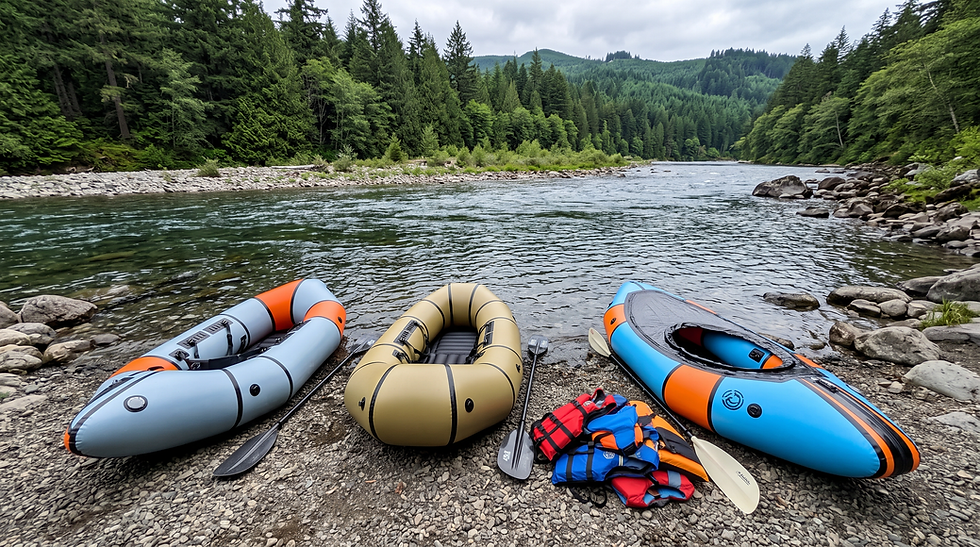
Every trip starts with the "core four": a packraft, a paddle, a personal flotation device (PFD), and a way to inflate the boat (an inflation bag or small pump). On any moving water, add a paddling helmet.
Beyond that, dress for the water temperature rather than the air, keep your gear in dry bags, and carry a repair kit, whistle and river knife. Our full packrafting gear list breaks it all down item by item.
Choosing Your First Packraft
For most beginners, the right first boat is a versatile, self-bailing packraft that is light enough to carry and stable enough to build confidence. Think about where you'll paddle most, how far you'll carry it, and how much gear you need to haul.
Our lineup covers the main use cases: the ultralight Carver Packraft (5–6 lb) for hike-in lakes and fast-and-light trips, the high-capacity Badger Packraft (7–8 lb) for gear-heavy and expedition trips, and the whitewater-focused Stance Packraft (8–9 lb) with a removable spray skirt. For a deeper comparison, read How to Choose a Packraft.
Your First Time on the Water: Step by Step
Practice at home. Inflate and deflate your packraft in the backyard or living room so the process is familiar before you're at the put-in.
Pick calm, warm water. A small lake or pond is ideal. Choose a spot where the wind blows toward shore, and stay close to the bank.
Inflate and temper the boat. Top it off after it has sat in the water for a few minutes, since cold water makes the air inside contract. See How to Inflate a Packraft.
Launch from shore. Set the boat in shallow water, sit down in the middle, then pull your legs in.
Learn three strokes. A forward stroke to move, a sweep stroke to turn, and a low brace to stay upright when the boat wobbles.
Practice a swim. In warm, shallow water, intentionally tip out, flip the boat back over and climb back in. It's the single most valuable skill you can learn on day one.
Pack up properly. Rinse, dry the boat inside and out, and store it loosely in a cool, dry place.
Beginner Skills to Learn Next
Once you're comfortable on flat water, the next step is learning how moving water behaves. Start on gentle Class I rivers and learn to read current, catch eddies, ferry across the river and spot hazards like strainers (downed trees that let water through but not people).
River difficulty is rated on the International Scale of River Difficulty from Class I (easy, moving water) to Class VI (extreme). Progress one step at a time, and only paddle water you'd be comfortable swimming. A swiftwater rescue course is the best investment you can make as you progress. Our Self Rescue It and Read It: Spot Hazards Fast posts are great next reads.
Common Beginner Mistakes to Avoid
Underestimating wind. Packrafts are light and catch wind easily. A breezy lake crossing can turn into a long, cold struggle.
Dressing for the air. Cold water is the bigger risk. Dress for a swim, not for the sunshine.
Paddling alone. Bring a friend, especially on moving water.
Jumping ahead too fast. If you haven't paddled Class III, don't start on a Class III river.
Skipping the scout. If you can't see what's around the bend, get out and look.
Where to Go Packrafting as a Beginner
Start close to home: calm lakes, reservoirs and slow Class I rivers with easy access and no committing sections. Local paddling clubs, guided packrafting courses and the American Packrafting Association are great ways to meet mentors. If you're in the Northwest, our guide to packrafting in Oregon and the Pacific Northwest shows how to plan a first trip responsibly.
Ready to Get Started?
Packrafting rewards curiosity. Start small, build skills on easy water, and you'll be linking lakes and rivers into adventures in no time. Browse our packrafts, handcrafted in Portland, Oregon, or check our FAQ if you have questions.
Frequently Asked Questions
Is packrafting hard to learn?
No. On calm water most people are comfortable within an hour. Moving water and whitewater require real skills, so build experience gradually and consider a swiftwater rescue course.
How much does a packraft weigh?
Most packrafts weigh between 5 and 9 pounds. Go North packrafts range from 5–6 lb for the ultralight Carver to 8–9 lb for the whitewater-focused Stance.
Do I need a helmet for packrafting?
Wear a paddling helmet on any moving water or whitewater. On a calm lake a helmet is less critical, but a PFD is always required.
Can you go packrafting alone?
It isn't recommended, especially on rivers. Paddle with at least one partner who can help in an emergency, and always tell someone your plan.


Comments