

Packrafting Gear List: The Complete Checklist for Every Trip
A good packrafting gear list keeps you safe, dry and light. Packrafting borrows from both backpacking and whitewater paddling, so it's easy to forget something important. Use this list to build your kit, then scroll to the bottom for a quick checklist you can run through before every trip.
The Core Four
These go on every trip, no exceptions:
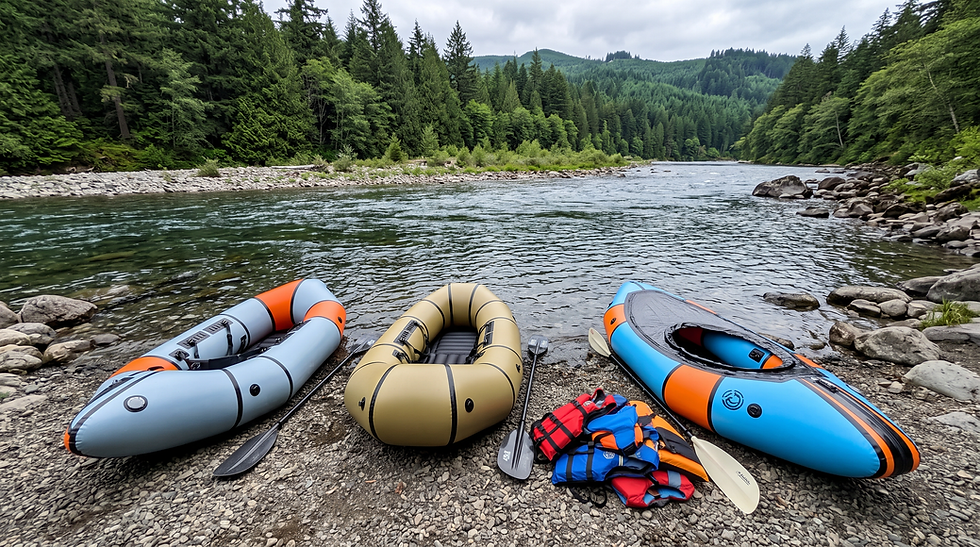
Packraft. Matched to your water and load. See How to Choose a Packraft.
Paddle. A 4-piece kayak paddle packs well. As a starting point, many paddlers use roughly 194–210 cm for whitewater and 210–220+ cm for flat water and touring. Buy the lightest, strongest paddle you can afford; a broken paddle mid-trip is a serious problem.
PFD. A properly fitted, Coast Guard-approved life jacket. Wear it, don't pack it.
Inflation bag or pump. Plus a way to top off the boat. See How to Inflate a Packraft.
Safety Gear
Paddling helmet for any moving water
Throw bag and the training to use it
River knife mounted on your PFD
Whistle attached to your PFD
Repair kit: patches, tape and adhesive (every Go North boat ships with a patch kit)
First aid kit in a waterproof bag
Satellite messenger or PLB for remote trips without cell service
Headlamp with spare batteries
Clothing: Dress for the Water
The most common packrafting mistake is dressing for the air temperature instead of the water temperature.
Drysuit or wetsuit for cold water and shoulder seasons
Synthetic or wool base layers (avoid cotton)
Splash jacket or rain shell for warm conditions
Sturdy, closed-toe footwear that drains well and works for hiking
Paddling gloves or pogies in cold weather
Sun hat, sunglasses with retainer and sunscreen
Dry change of clothes sealed in a dry bag
Keeping Gear Dry and Carrying It
Backpack that fits your boat. Our Packraft Backpack is built for it.
Dry bags or a pack liner for everything that must stay dry
Bow bag for snacks, phone and a layer. See our Bow Bag.
Duffle for gear on longer trips. See our Duffle Bag.
Straps to lash gear to the bow D-rings
Internal storage: Go North packrafts have an airtight rear zipper so you can stash dry-bagged gear inside the tubes
Multi-Day Additions
Tent or shelter, sleeping bag and pad
Stove, fuel, pot and lighter
Water filter or purification
Food plus one extra day of emergency rations
Map, compass and river guide or beta
Permits and fishing license if required
Trash bag and a trowel
Optional Upgrades
Thigh Straps for whitewater control
Back Band for all-day comfort
Mini pump for faster top-offs
Fishing kit (see Packraft Fishing)
Bike straps for bikerafting (see Bikerafting 101)
Quick Pre-Trip Checklist
Packraft, paddle, PFD, inflation bag
Helmet, throw bag, knife, whistle
Repair kit and first aid kit
Clothing for the water temperature
Dry bags, backpack, straps
Satellite messenger and float plan left with a friend
Water, food, sun protection
Map, river beta and current flow check
Pack it up, double-check the weather and flows, and go have fun. Need gear? Browse our packrafts and accessories.
Frequently Asked Questions
What is the essential gear for packrafting?
The core four are a packraft, a paddle, a PFD and an inflation bag or pump. On moving water add a helmet, throw bag, knife and whistle.
What paddle length do I need for a packraft?
As a starting point, use about 194–210 cm for whitewater and 210–220+ cm for flat water and touring. Your height, boat width and paddling style all play a role.
Do I need a drysuit for packrafting?
In cold water or shoulder seasons, a drysuit or wetsuit is strongly recommended. Always dress for the water temperature, not the air.
How do I keep gear dry in a packraft?
Use dry bags or a pack liner, store dry-bagged gear in the boat's internal storage, and keep small essentials in a waterproof bow bag.


Comments